Maya A. Petkova
Astronomer | Postdoctoral Researcher
Chalmers University of Technology

About me
I am a postdoctoral researcher at Chalmers University of Technology, Sweden. My research focuses on star formation and feedback, especially in extreme environments. I completed my PhD in Astronomy in 2018 at the University of St Andrews, UK, where I worked with hydrodynamics and radiative transfer simulations.
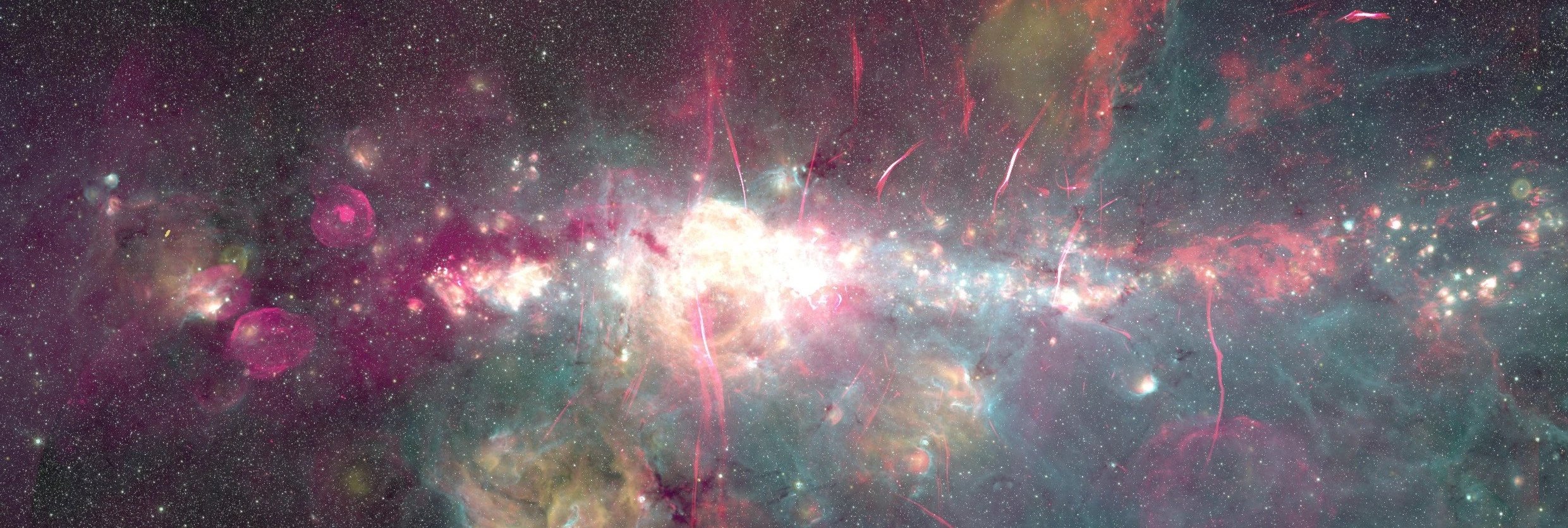
I am very interested in the interplay of star formation and stellar feedback, which leads to the formation of structures on a variety of scales. In particular, a lot of my work focuses on the Galactic Centre region, which is the most extreme and dynamically interesting star-forming environment in our galaxy. While my background is primarily in numerical simulations, I actively seek opportunities to compare my results to observational data. As such, I am part of the management team of the ALMA CMZ Exploration Survey (ACES).
Research
Star formation in the Central Molecular Zone
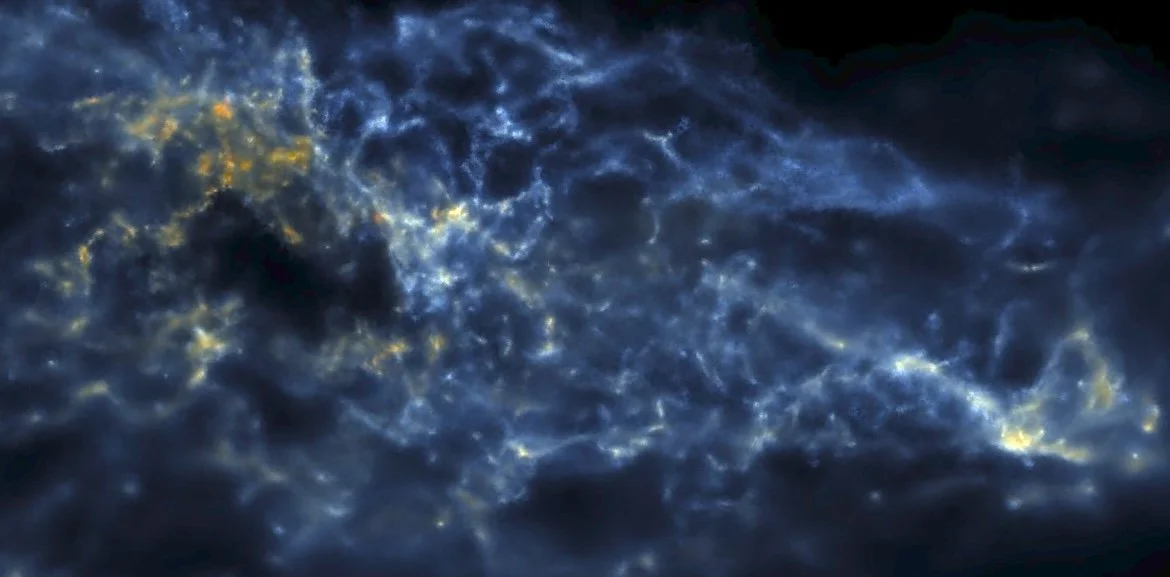
Most of our in-depth understanding of star formation comes from studies of the Solar neighbourhood, which is not a representative environment for the conditions in which most stars in the Universe have formed. Through telescope advancements, it is now possible to conduct detailed studies of the nearest extreme star formation environment which is the Central Molecular Zone (CMZ) of the Milky Way’s Galactic Centre (the central ~500 pc). The CMZ presents an ideal test ground for the less constrained aspects of star formation. My work aims to pinpoint and understand the important physical processes that shape star formation in the CMZ by comparing numerical simulations to observations.
The origin of supermassive black holes
Most massive present day galaxies contain a supermassive black hole (SMBH) in their centres. These SMBHs are typically millions to billions of times more massive than the Sun and play a key role in regulating galaxy evolution through their powerful feedback. Despite their importance and widespread presence, their origin remains unknown and actively debated. In the era of the James Webb telescope, we find signs of the presence of high mass SMBHs when the Universe is only millions of years old, and therefore any formation mechanism needs to be able to account for these extreme objects early on. In my work, I explore a scenario in which SMBHs originate from a special type of supermassive stars, which are the first compact objects to form in their cosmic neighbourhood. I use my models to make observational predictions for statistical properties of SMBHs in the Universe which can allow us to distinguish between the possible formation scenarios.
Numerical modelling of feedback
Stellar feedback is how the star formation process self-regulates, and it plays a crucial role in how small scale structures impact the larger scales. The implementation of various types of feedback has been a key feature in the advancement of hydrodynamics simulations on various scales over the last couple of decades. And indeed, feedback plays a crucial role in the other two research areas that I am interested and active in. My own interest in feedback and the more technical aspects of numerical modelling, has led me to perform my own code development which is primarily related to the inclusion of photoionisation in hydrodynamics simulations.